
Mold After Water Damage in Austell, GA
A musty smell that comes back, dark spotting on drywall or baseboard, a closet that stays damp after a leak: mold after water in Austell, Mableton and Clarkdale starts with the moisture. Call (678) 737-4866 and say where the spotting shows, what got wet earlier and how long ago.
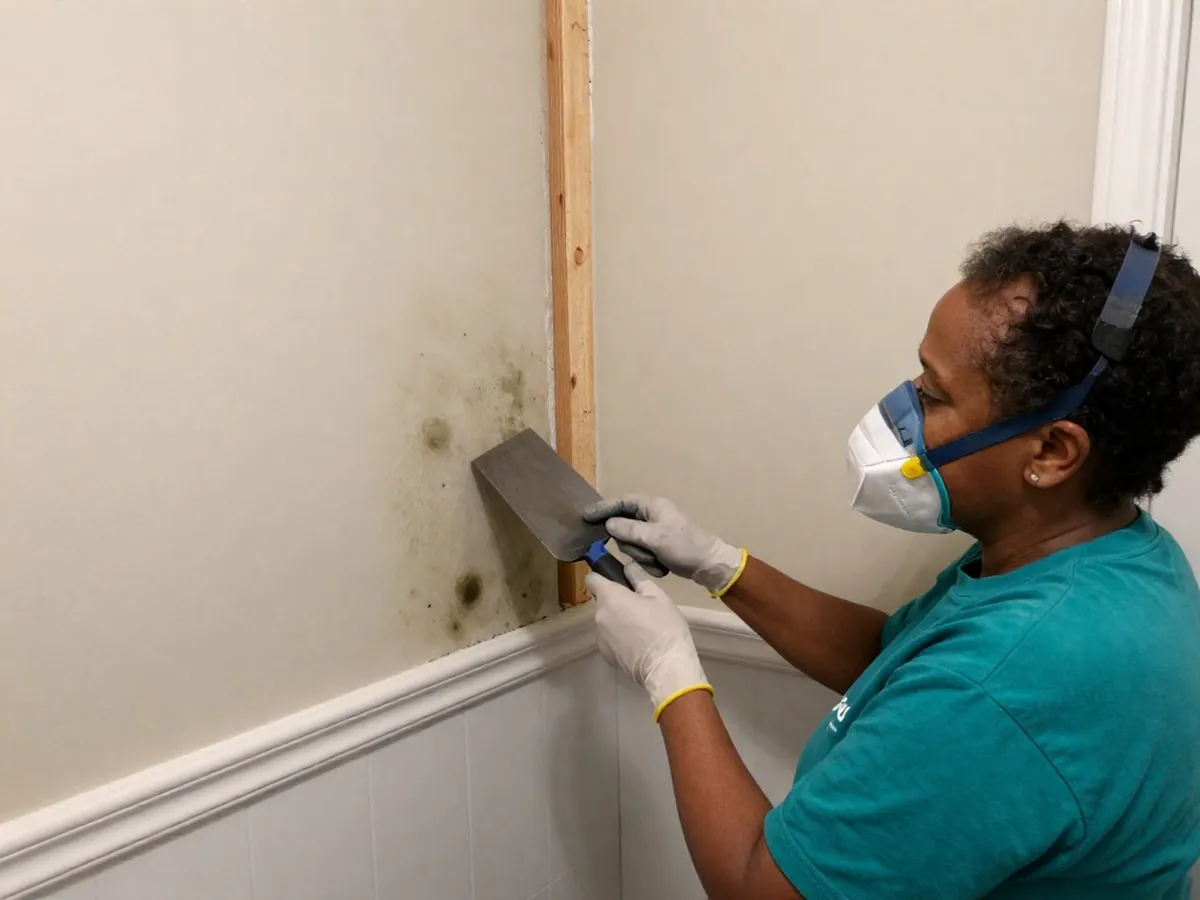
Dark spotting and musty smells after a wet spell
- A musty smell that returns after you air the room out
- Dark or fuzzy spotting on drywall, baseboard or the underside of carpet
- A wall that feels cool and damp near an old leak
- Paint or wallpaper peeling in a patch that was once wet
- A crawl space or closet that smells of damp earth
Moves that backfire
Four moves that feed a damp wall
- 01
Scrubbing before the water source is stopped. The EPA's first instruction is to repair leaks and water problems, then dry everything completely.
- 02
Painting over dark spotting. The paint covers the spot and leaves the moisture.
- 03
Pointing a fan at visible mold. The EPA says to wait on fans and dehumidifiers until visible mold has been gently cleaned, so they do not spread it.
- 04
Turning on a flooded HVAC system. Before it runs, the CDC wants it inspected and cleaned by someone experienced in mold cleanup.
Where it tends to start
- Materials that stayed wet after a leak or flood
- Humidity that stays high in a closed-up room
- A seeping leak inside a wall or beneath a floor
- A crawl space where moisture settles
- Wet carpet or pad that was never fully dried
Back away and get help if
- Spotting in a room that sewage or floodwater soaked: children and pets stay out, and nothing gets scrubbed or disturbed.
- Water still dripping around outlets, light fixtures or the panel: touch nothing, leave the room and phone 911 or the electric company.
- A gas smell from a water heater or furnace in a damp closet or utility room: leave and call the gas utility or 911 from outside.
- A wall or ceiling drooping at the spotting: keep out from beneath it; if it begins to fall, dial 911.
How a job tends to run
From a musty smell to a dry wall
- Finding the water
The source of the moisture is found and stopped; the EPA says to repair water problems promptly and dry items completely.
- Sizing it
The spotting is measured against the EPA's 10 square foot guideline, and hidden patches are checked behind baseboards and under flooring.
- Removal
Porous material with mold in it, such as ceiling tile or carpet, may go; hard surfaces are scrubbed with detergent and water and dried.
- Drying
Moisture readings guide the work; the EPA puts the target for refinishing at 15 percent or less.
- Watching
The area is checked again for new dampness after the next heavy rain.
Questions for the contractor
Five questions to put to a mold contractor
- What does the plan do about the moisture, beyond the spotting?
- Which materials are coming out, and which are being cleaned?
- How will the work area be separated from the rooms around it?
- What will be measured to show the wall is dry?
- Can I speak with earlier customers about similar work?
Looks from dry ground
These are looks and sniffs from dry ground. Anything calling for a ladder, a tool or a step onto a wet floor belongs to the contractor.
- Stand a step back from the spotting and photograph it with a ruler beside it. Roughly 10 square feet, a patch about 3 feet by 3 feet, is the size the EPA says most people can handle alone.
- Hunt for the moisture. Check the nearest sink, tub, window and roof edge, and the wall behind them, for dampness or staining.
- Check the humidity with a basic meter. The EPA suggests a reading under 60 percent; between 30 and 50 is ideal.
- Note when the area last got wet. The CDC says to assume a flooded home closed up for several days has mold.
What changes the size of the job
What stretches a mold cleanup
- How much surface.
- Under or over the EPA's 10 square foot line changes who does the work.
- What it grew on.
- Hard surfaces can be cleaned; porous ones such as ceiling tile and carpet may have to go.
- Whether the source is gone.
- Mold returns to a wall that gets wet again.
- How hidden it is.
- Behind cabinets, under flooring and inside wall cavities, reaching it takes demolition.
Local lines to know
- According to Georgia's public health department, neither the state nor the federal government enforces a standard for mold inspection, testing or remediation, and readers are pointed to EPA and UGA Extension guidance. The EPA keeps no contractor list and runs no certification program.
- UGA Extension's maintenance checklist names mold, moisture, water damage and leaks as the signs to look for in a basement or crawl space.
Straight answers
How urgent is mold after a leak, from 1 to 10?
Eight to ten when the spotting is in a flooded or sewage-soaked area, or the room has a sagging ceiling, live wiring or a gas appliance: leave it and use 911 or the utility. Four to seven for spotting that is growing on a wet wall. One to three for a small, dry patch where the source was repaired.
When does mold start to grow after water gets in?
The EPA's window is a day: building materials and furniture that stay wet longer than 24 hours can grow mold, which is why its guide aims to dry water-damaged areas within 24 to 48 hours. In a flooded home that has sat closed up for several days, the CDC advises assuming mold is present.
How big a patch can a homeowner clean?
Under about 10 square feet is the EPA's line for what most people can clean themselves, though it advises against it after extensive water damage or when the growth is larger. Hard surfaces take detergent and water and then a complete drying. Porous items, which include carpet and ceiling tiles, might have to be discarded.
Is a mold test the first step?
Georgia's public health department notes that neither the state nor the federal government enforces any standard for mold inspections, testing or remediation. Before paying for a test, ask what it would change about the plan; the EPA's advice puts stopping the moisture first.
Is a Mableton or Clarkdale house included?
Yes. Each town has a page of its own, Mableton's page and Clarkdale's page. Call (678) 737-4866 and say where the spotting is, along with anything that got wet earlier.
Keep the street address, the wet room and a few phone photos close by. Then call (678) 737-4866 and describe where the water came from and what it touched. Tenants, tell the owner or manager as well.
Call (678) 737-4866A word on paperwork
Mold work and the state's silence
Georgia's public health page says there are no enforceable standards for mold work. The paperwork page covers what that means when choosing who to hire.