
Flooded Basement and Crawl Space in Austell, GA
Water over a basement floor, a sump pump that cannot keep up, or a crawl space that smells like wet earth: below-grade water in Austell, Mableton and Clarkdale often follows a soaking rain. Call (678) 737-4866 and tell the depth of the water, the spot where it came in and what is stored down there.
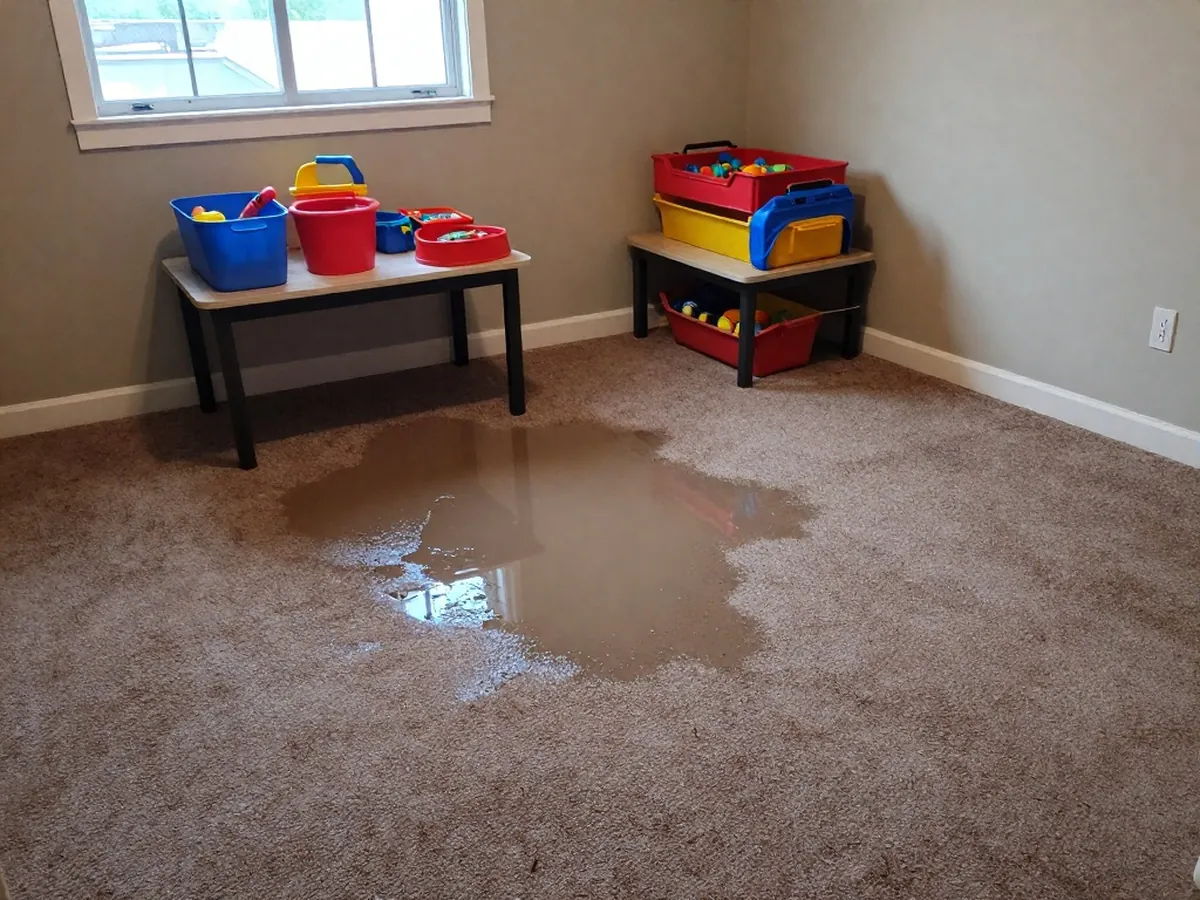
Standing water below grade in Austell homes
- Water across the slab or in the lowest room
- A waterline stain on foundation walls or on stored boxes
- Puddles under the stairs after heavy rain
- A sump pump that runs nonstop, or sits silent while water rises
- A musty smell coming from vents near a crawl space
Moves that backfire
Four ways a flooded basement turns dangerous
- 01
Walking in to flip the breaker. The CDC says the main switch gets turned off only when it is reachable from dry ground; where the way to it runs through standing water, the job belongs to an electrician.
- 02
Setting a gas-powered generator or pump up inside the garage, even with the door propped open. Carbon monoxide has no smell, and the EPA places generators outdoors, 20 feet or more from buildings.
- 03
Wading through floodwater outside to reach the house. Austell's flood page says six inches of moving water can knock a person off their feet and a foot of it can carry off a vehicle.
- 04
Sealing wet walls behind paint or paneling. The EPA advises against sealing flooded areas such as wall cavities.
Where it tends to start
- Rain overwhelming a window well or a door at grade
- Gutters and downspouts emptying beside the foundation
- A sump pump that stopped or lost power
- A creek or ditch rising after days of rain
- A supply line or water heater leaking in a finished basement
Back away and get help if
- The breaker panel, an outlet or a cord is wet or in standing water: stay out, phone 911 or the electric company, and do not flip any breaker.
- Gas furnace or water heater in the flooded area, or a gas odor in the air: step outside and make the report to the gas company, or to 911, from a safe distance.
- Keep gas pumps and generators out of basements, garages and porches; the EPA says outdoors, 20 feet or more from buildings, as carbon monoxide has no smell.
- Water that rose through a floor drain or toilet, or flowed in from a creek, may hold sewage: children and pets stay out, and nobody touches it.
How a job tends to run
From waterline to bare slab
- Before going down
Daylight, battery-powered light, and an electrician's word if the panel or outlets sit in water.
- Pumping out
Water leaves in stages while the walls and the floor drain are watched.
- Clearing
Soaked carpet, pad, boxes and other porous things come out; the CDC's discard list after floodwater contact names wall coverings, cloth, rugs and drywall.
- Drying
Dehumidifiers and fans run with doors and windows managed to the weather; the EPA says drying a flooded house usually takes several days to weeks.
- Reading the walls
Moisture-meter readings show whether the framing and slab are finished drying.
Questions for the contractor
Five things to settle before the pump starts
- Who confirms the electric is safe before a pump or fan is plugged in?
- Will the pump run on outside power or on fuel, and where does the exhaust go?
- What leaves the basement first, and what is photographed before it goes?
- How will the crawl space be checked and dried?
- What is the plan for the next heavy rain?
Looks from dry ground
These are looks and sniffs from dry ground. Anything calling for a ladder, a tool or a step onto a wet floor belongs to the contractor.
- From dry footing at the top of the stairs, photograph the waterline against the wall with a tape measure in frame.
- Walk the outside edge and look at the gutters and downspouts; UGA Extension's advice is for downspouts to empty 2 to 3 feet away from the house.
- If there is a sump pump, look at it from dry footing and note whether it is running. UGA's checklist includes the sump pump and the floor drain.
- At a crawl space, look at the access door for water and note any musty smell. Do not crawl in.
What changes the size of the job
What makes one flooded basement bigger than another
- Depth and floor area.
- A few inches over a small room and a foot across a whole level are different jobs.
- What is down there.
- Finished walls, carpet and storage hold water; a bare slab does not.
- Where the water came from.
- Rain, a creek and a drain carry different risks, and the CDC flags floodwater as possibly holding sewage.
- How the floor drains.
- A working sump pump or floor drain changes how long the water takes to leave.
Local lines to know
- Austell sends flood alerts by text: send AUSTELL to 888777, per the city's flood warning page, which also names Collar Community Center, at 2625 Joe Jerkins Boulevard, as the fire department's designated shelter.
- In September 2009 the National Weather Service crest table put Sweet Water Creek at Austell at 30.80 feet against a flood stage of 10, and Olley Creek at 27.40 against 12. The USGS said Sweetwater Creek near Austell peaked more than 6 feet above its estimated 500-year stage.
- The city's flood insurance page says more than 20 percent of flood claims come from outside the mapped high-risk zones, and it gives the National Flood Insurance Program number, 1-800-427-4661.
Straight answers
How urgent is a flooded basement? Rate it 1 to 10.
Eight to ten when the panel, outlets or a gas appliance are in the water, or the water is still rising: stay upstairs and use 911 or the utility. Five to seven for a wet finished space with the power off. One to three for a damp crawl space with no standing water.
Is it safe to go down and start pumping?
Not until the power question is settled. The CDC's guidance is to avoid switching power on or off, or using an electric tool, anywhere you are standing in water; to come back in daylight with battery-powered lights; and never to run gasoline engines indoors. Pumping out waits until electricity is confirmed safe.
Does homeowners insurance cover a flooded basement?
Policies differ, and the insurer decides. FloodSmart says most homeowners policies leave out flood damage, and that only a flood policy pays to rebuild after a flood. Photograph the waterline and keep receipts either way.
How long can a basement stay wet before mold shows up?
Mold needs little time. The EPA ties it to materials and furnishings that stay wet past 24 hours. A flooded house closed up for several days gets a blunter instruction from the CDC: presume mold is there. The EPA adds that full drying usually runs several days to weeks.
Is a basement in Mableton or Clarkdale part of this?
Yes. Mableton's page and Clarkdale's page each list local creeks and utilities. Call (678) 737-4866 and give the street, the depth of the water and what is stored below.
Keep the street address, the wet room and a few phone photos close by. Then call (678) 737-4866 and describe where the water came from and what it touched. Tenants, tell the owner or manager as well.
Call (678) 737-4866A word on paperwork
A flooded house and Austell's fifty percent line
Austell's floodplain pages define substantial damage as repair cost reaching 50 percent of a structure's market value. The paperwork page explains where that appears and who to ask.